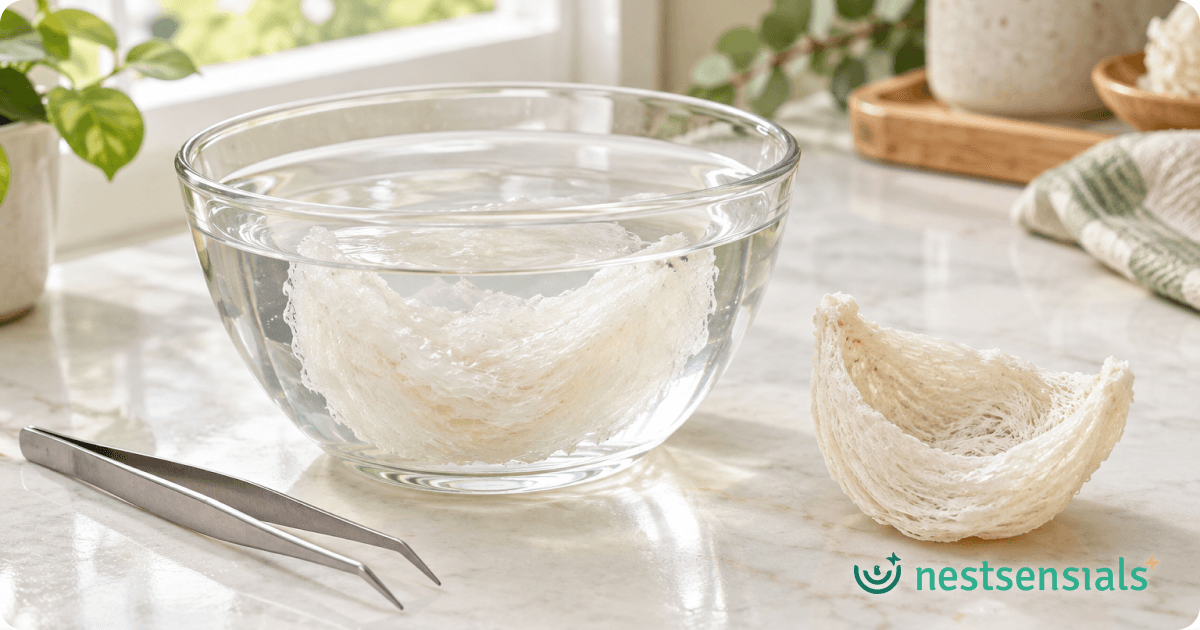
Soaking dried bird's nest is simple. Soak it in clean room-temperature water until soft, pull it apart along the strands, then pick out any remaining fine feathers before cooking. Soaking times vary by nest type, and this guide walks you through each step.
This article is the foundation for all our bird's nest recipes. Once you've mastered soaking and cleaning, most of the work is done.
What to prepare before soaking
You don't need any special equipment. Ordinary kitchen tools will do, as long as everything is clean and free of oil.
- A glass or ceramic bowl. White or clear makes it easier to see the strands and any leftover feathers.
- Drinking water or cooled boiled water. Clean water keeps the soaked nest safe to cook with.
- Small tweezers. Fine-tipped tweezers make it easier to pick out very fine feathers.
- A fine-mesh strainer. This lets you drain the nest without losing any small pieces.
- Kitchen scales (optional). Scales help you measure out dry portions. As a general kitchen guide, many people use around 3–5 grams of dried nest for a single serving bowl.
Wash your hands before you start. Soaked bird's nest absorbs odours easily, so keep it away from strong-smelling ingredients such as onions.
How to soak dried bird's nest, step by step
The steps below apply to every type of nest. Only the timing differs, which we cover in the next section.
- Take out only what you plan to cook. Soak just enough for that day's cooking. Keep the remaining dried nest in a sealed container in a dry place.
- Give it a quick rinse. Dip the nest in clean water for a few seconds to loosen any dust, then discard the water.
- Soak in room-temperature water. Place the nest in a bowl and pour in enough water to cover it completely. Use plenty of water, as the nest absorbs it and expands to several times its original size.
- Wait until it softens. Leave it for the time range recommended for your type of nest. If soaking for more than a few hours, it's best to keep the bowl in the fridge.
- Separate the strands along the grain. Once softened, gently pull the nest apart with your fingers, following the direction of the strands. Don't squeeze it, so the strands stay intact after cooking.
- Check for and remove any fine feathers. Do this in a bowl with a little clean water. The method is explained in more detail below.
- Rinse and drain. Rinse once more with clean water, drain in a fine sieve, and the nest is ready to cook.
Soaking times by type of bird's nest
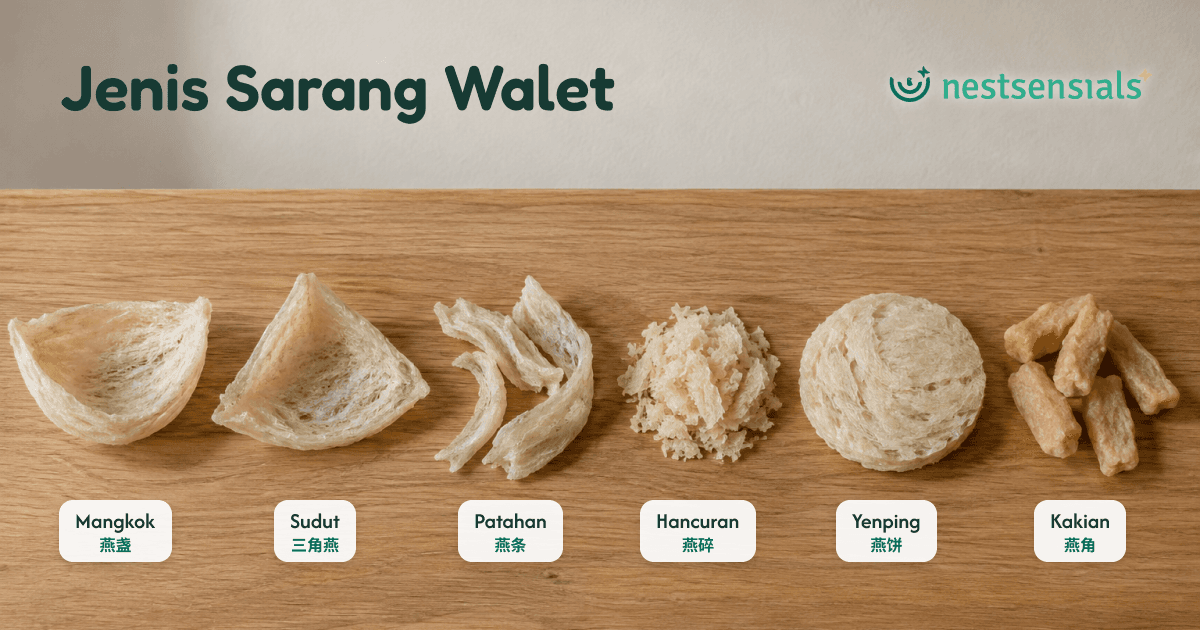
Each type of nest has a different thickness and density, so soaking times vary. The figures in this table are general kitchen guidelines, not strict rules. Always check the softness with your fingers.
| Nest type | Description | Soaking time range | Notes |
|---|---|---|---|
| Whole cup (Mangkok) | Intact nest shaped like half a bowl | 6–8 hours, or overnight in the fridge | The edges are thicker and need longer |
| Corner cup (Sudut) | Nest formed in the corner of the swiftlet house, less regular in shape | 4–6 hours | Thicker sections may need extra time |
| Large strips (Patahan Besar) | Larger broken pieces of nest | 2–4 hours | Ideal for everyday cooking |
| Small strips (Patahan Kecil) | Smaller broken pieces of nest | 2–3 hours | Softens faster because the pieces are small |
| Fragments (Hancuran) | Fine fragments | 1–2 hours | Use a fine strainer when draining |
| Yenping (pressed nest cake) | Fragments pressed into cakes | 2–4 hours | Break it up first so the water soaks in evenly |
| Nest feet (Kakian) | The thick, hard feet or base of the nest | 8–12 hours, or overnight in the fridge | Takes the longest to soften; change the water once halfway through soaking |
For nest types that need a long soak, such as Kakian nest feet and whole cups, you can leave them to soak overnight in the fridge. By the next morning they'll be ready to pull apart.
How to remove any remaining fine feathers
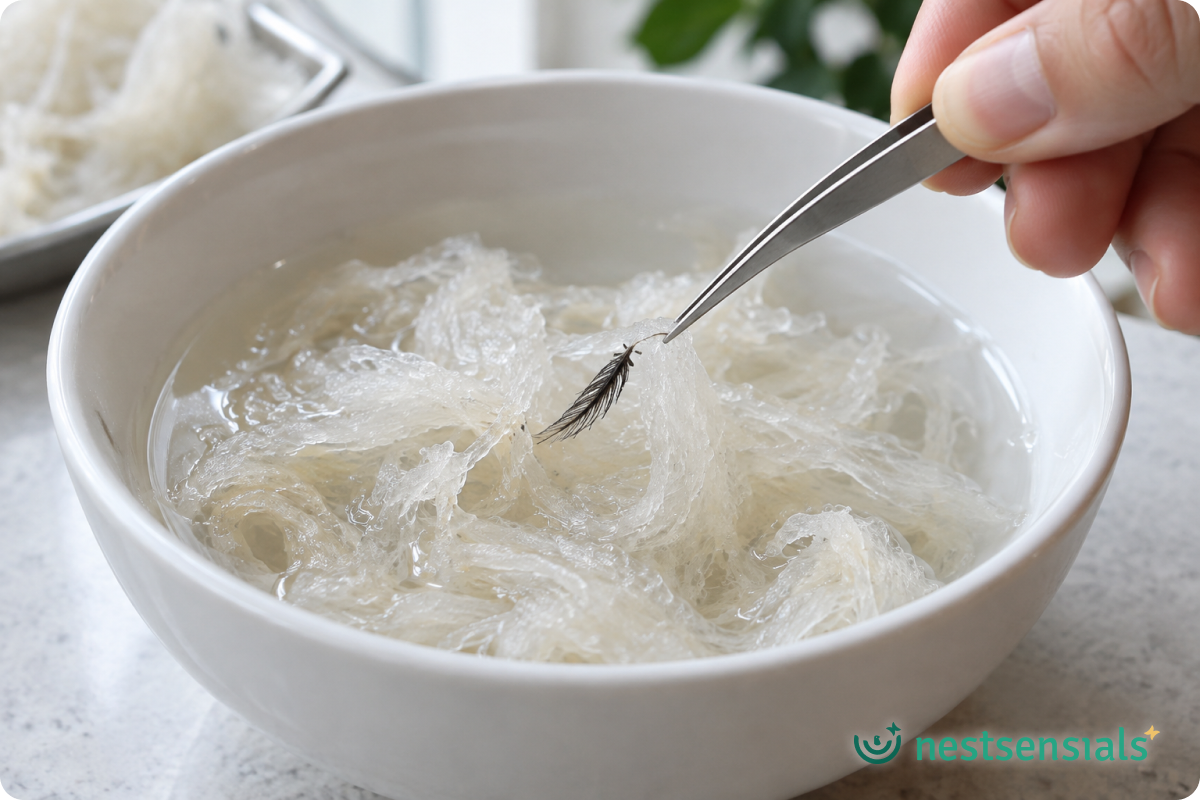
Ready-to-cook bird's nest is cleaned before it is sold. Even so, there may occasionally be one or two very fine feathers left. These are easiest to spot once the nest has been soaked and expanded.
- Place some of the shredded nest in a white bowl with a little clean water.
- Gently swirl the bowl. Fine feathers usually float to the surface or show up as dark specks among the strands.
- Pick the feathers out with tweezers. Work in small batches so nothing is missed.
- Move the cleaned portion to another bowl, then carry on with the next batch.
Work somewhere well lit, such as near a window. Good light makes the job far quicker.
For whole cup nests in particular
Whole cups (Mangkok) have a beautiful shape, so many people want that shape to still be visible when the nest is served. If that's your goal, don't shred it too finely. Simply loosen the strands into a few large sections so that water and heat can get in evenly.
The edges of a whole cup are usually thicker than the centre. After soaking, check the edges with your fingers. If they still feel firm, soak just those parts a little longer. You can see the product details on the Genuine Dried Whole Cup Bird's Nest (Mangkok) page.
Signs your bird's nest has soaked long enough
The times in the table are only a guide. Room temperature, the thickness of the nest and the amount of water all make a difference. Use the following signs as your reference:
- The nest feels soft and springy when pressed, with no firm spots in the middle.
- The strands separate easily with your fingers, without having to pull hard.
- The colour changes from dull to more translucent.
- It has clearly expanded compared with its dry size.
If the nest is soft but a few small pieces are still firm, there's no need to soak the whole lot again. Just separate those firm pieces and soak them a little longer.
Common mistakes when soaking
- Using hot water. Hot water does speed things up, but it can leave the nest soft and prone to falling apart during cooking. Use room-temperature or cold water instead.
- Soaking too long at room temperature. In warm weather, leaving food to sit on the kitchen counter for hours isn't ideal. For long soaks, move the bowl to the fridge.
- Using too little water. The nest absorbs water and expands. If there isn't enough, the top won't stay submerged and won't soften evenly.
- Squeezing or scrubbing the nest. This breaks the strands down into tiny fragments. Gently pull them apart along the grain instead.
- Using soap, bleach or other chemicals. Bird's nest only needs clean water and a pair of tweezers. Chemicals should never be used on this food.
- Soaking your entire stock at once. Once a nest is wet, it can't be returned to its original dry state. Only soak the portion you plan to cook.
- Leaving it too long before cooking. Cook the nest as soon as it's clean. If you have to wait, keep it in a covered container in the fridge and use it as soon as possible.
After soaking: on to cooking
Once the nest is soft, clean and drained, you're ready to cook. The most common method is double-boiling: steaming it in a covered container with water and a sweetener of your choice.
We've covered the whole process on our 6 steps to preparing bird's nest, with recipes page. You'll also find a few recipes there that you can try straight away with the nest you've just soaked.
Frequently asked questions
Does ready-to-cook bird's nest still need soaking?
Yes. "Ready to cook" means the nest has been cleaned of debris before sale. It's still dry, so it needs soaking until soft before you cook it.
Can I soak bird's nest overnight?
Yes, especially for thicker grades such as whole cups (Mangkok) and feet (Kakian). Place the soaking bowl in the fridge rather than leaving it at room temperature, and change the water once if you can.
What kind of water is best for soaking?
Use drinking water or boiled water that has cooled. Avoid hot water, as it can leave the nest soft and mushy.
Which grade is quickest to prepare?
Fragments (Hancuran) and small strips soften the fastest because the pieces are small. Whole cups (Mangkok) and foot pieces (Kakian) take the longest, but they yield longer, more intact strands.
Now you know how to soak and clean dried bird's nest at home. Choose the type that suits your schedule and your recipe in our product catalogue. Once you've made your choice, follow the steps on our how to order via WhatsApp page.